
Risk Assessments - The Living Document

Xcurison Admin • October 26, 2025

A Guide to Writing Effective Risk Assessments

Risk assessments are something everyone seems to hate doing, and I understand why. As a teacher, you're always under competing time pressures. But often, the problem isn't the document itself; it's the flawed process behind it.


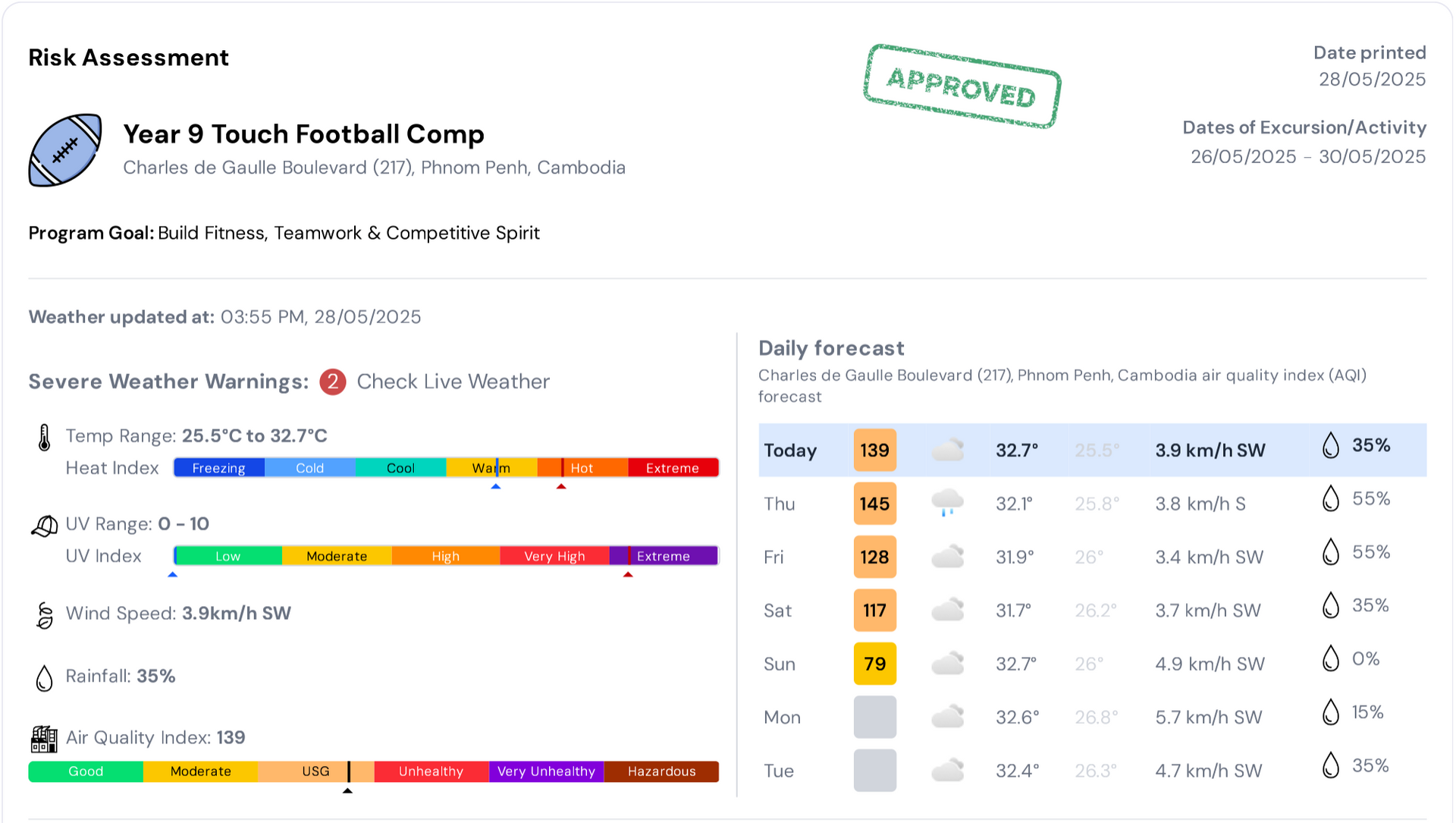
A risk assessment and management system (RAMS) is a living document. It's not something you write to make the principal happy and then file away until something goes wrong. It should embody the specific risks of an activity and detail how those risks will be managed to create a well-planned experience for your students.


The 'Copy-Paste' Catastrophe: A Case Study in Negligence


I was once auditing the risk management systems for a school where it quickly became apparent that all their risk assessments had been blindly copied and pasted from one activity to another with zero regard for the content.


The exact same risks were listed for hiking as they were for canoeing, rugby, and even tennis. The risk of "drowning" was listed for a tennis match, which would be laughable if it weren't so negligent. The documents, some dating back three years, were signed and dated, but nobody had checked them at all. If you sign off on that document, you are responsible and potentially liable for what's in it.


The Three Core Pillars of a Dynamic Risk Assessment


A generic risk assessment is a recipe for disaster. To avoid this, and rather than trying to think of every risk in the world, ensure you cover the three key elements that relate to your specific activity: 


People, Environment, and Equipment.


  • People: Who are the participants? What is their skill level, medical needs, and behavioural profile?
  • Environment: Where and when is the activity taking place? Consider weather, terrain, and location-specific hazards. For example, bushfires are a major risk in hotter months, while exposure to cold is a concern in winter.
  • Equipment: What gear is being used? Is it in good condition and appropriate for the participants and environment?


From Paperwork to Practice: Using the Right Tools


This is where school excursion risk assessment software like Xcursion Planner becomes essential. It solves the "copy-paste" problem by design. The software prompts you to build a specific plan for each unique trip, camp, or sporting activity. It guides you through a logical workflow, ensuring you consider all the dynamic variables. This turns the process from a dreaded paperwork exercise into a valuable planning tool. This process, combined with effective risk management training for teachers, creates a powerful culture of proactive school excursion risk management.

Ultimately, a good risk assessment isn't about the paperwork itself. It's about the direct correlation between your proactive planning and your good practice in the field. It’s a tool that helps you make every one of your activities better-managed and more rewarding for your students.

By Xcurison Safety August 27, 2026
Transform your school's excursion approval process from a compliance checklist into active risk management. Protect your students, staff, and legal liability.

By Xcurison Safety August 25, 2026
When things go wrong off-site, who is actually responsible? Discover why relying on paperwork isn't enough for school excursion safety decisions and risks.

By Xcurison Safety August 23, 2026
NZ’s own EOTC incidents show what happens when risk planning isn’t clear or current — and what school leaders need for lasting, field-ready safety systems.

By Xcurison Safety August 19, 2026
The moment students leave the classroom, duty of care shifts dramatically. Understand how risk changes and what schools must do differently on excursions and trips.

By Xcurison Safety August 17, 2026
School leaders are moving away from compliance-heavy risk assessment to system-based approaches. Learn why schools are rethinking excursion risk management.

By Xcurison Safety August 13, 2026
Most school excursion approvals are complex theatre. Learn what real approval looks like, why it matters for duty of care, and how to build a defensible process.

By Xcurison Safety August 11, 2026
Structured risk assessments reduce decision fatigue and protect staff when they're tired. Learn why documented plans beat improvisation on school excursions.

By Xcurison Safety August 9, 2026
Discover why schools struggle to recognise foreseeable risks on excursions. Learn how training, culture, and situational awareness prevent blind spots.
By Xcurison Safety August 6, 2026
Scattered medical data, consent forms, and risk assessments create blind spots. Here's why centralised excursion management systems protect schools.
By Xcurison Safety August 4, 2026
Systems and preparation enable sound risk decisions on excursions. Learn how to structure training, clarity, and support so staff make good calls when it matters.
Show More