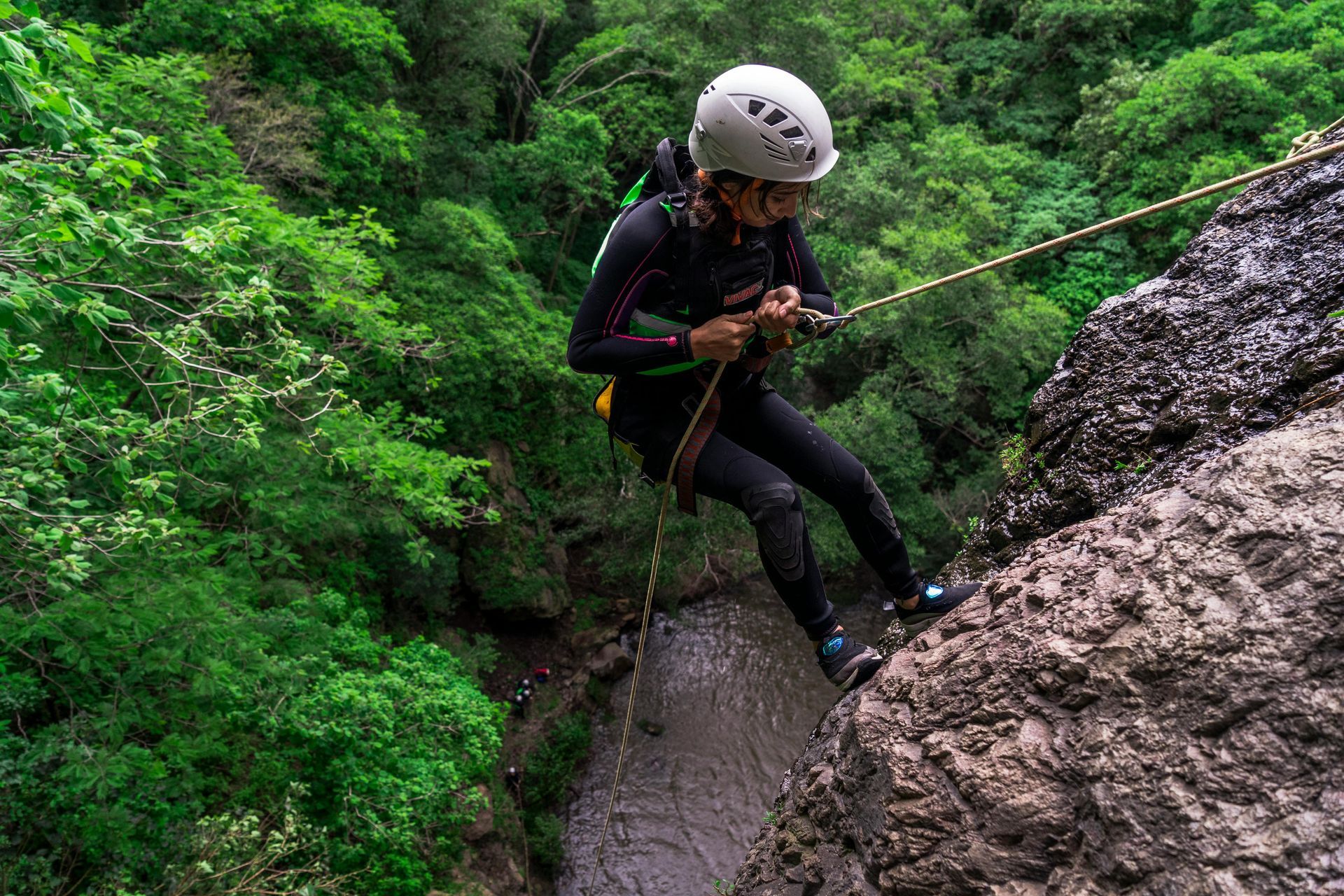
Most people will either get excited or feel their stomach drop. I'm somewhere in between. I love descending a rope from small towers to massive multi-drop cliffs but it wasn't always easy.
I'm not afraid of heights exactly, but there's something deeply unnerving about that first step backward off a cliff edge. My first experience was at Lake Keepit Sport & Rec on a Scripture Union camp when I was 12. First challenge: figuring out the weird harness. Then came the sitting around and waiting... and waiting... and waiting. This is abseiling's biggest operational challenge with young people; the downtime is almost unavoidable, but the upside from this activity is enormous.
When Perceived Risk Meets Actual Safety
Looking back, I nervously approached the top clutching my harness as I stepped closer. Safety line firmly in hand, I peered cautiously over what looked like an enormous drop. The instructor didn't say much, which didn't help matters here. I was connected to the belay and abseil lines, then told to go with minimal other instructions.
I teetered at the edge for what felt like forever. Not wanting to look down but needing to see where I was going. I looked forward and stepped back, heart pounding so hard I could feel it in my eardrums. Another awkward lurching step. My foot slipped, but I caught it just in time and suddenly I was over the edge! Leaning back, I was abseiling. The rest was an exciting blur, and before I knew it, I was on the ground staring back up at a drop that looked nothing like what I'd feared at the top.
The Safety Paradox: Abseiling Risk Management
Here's what surprises most people: despite being perceived as one of the scariest and most dangerous activities, abseiling is actually one of the safest outdoor education activities you can run.
Think about it from a risk-benefit perspective. You've got:
A properly fitted harness
An abseil line (primary system)
A belay line (backup system)
A no-single-point-of-failure setup
From a technical safety standpoint, it's exceptionally secure. From the participant's viewpoint especially students and even some teachers it's a completely different picture. That gap between perceived and actual risk is precisely where the learning happens.
The Psychological Challenge: Where Real Growth Occurs
The mechanics of abseiling are straightforward: walk backwards. That's it. But the psychological challenge of getting yourself over the edge? That's the real task, and it's where outdoor education abseiling programs deliver exceptional value.
Most participants freeze right at the top not halfway down, not near the bottom, but at the very start of the descent. This predictable pattern is something skilled instructors work with calmly and patiently.
Critical instructor practice: Never pressure anyone to the point of feeling overwhelmed. That's not good for anyone and can damage trust in your entire program. Be supportive, help them understand what they're experiencing, but if they decide not to go, acknowledge how well they did by even attempting it.
Building Self-Efficacy Through Managed Challenge
For those who push themselves past their fears, this becomes a powerful experience. Breaking down anxiety and taking that first step backward can boost someone's self-esteem significantly.
This is where your duty of care intersects with educational outcomes managing the benefit-risk balance so participants can safely experience genuine challenges.
At session's end, debriefing is vital. Get everyone reflecting:
How did you feel before versus after?
What did you learn about yourself?
Where else in your life could this mindset help you push beyond your comfort zone?
Connect the dots explicitly between overcoming this fear and tackling other challenges in their everyday lives. This metacognitive work transforms a one-off activity into lasting learning.
Operational Realities for Program Leaders
Managing waiting time: Build in structured observation, reflection activities, or rotation with complementary activities. Waiting doesn't have to mean wasted time if you design around it.
Instructor capabilities matter: Beyond technical qualifications, look for people who can read participants, adjust their approach in real-time, and create psychological safety while maintaining physical safety protocols. This isn't just about certifications though those matter, it's about judgment and presence.
Group composition: Small, specialized groups work best for abseiling safety programs. This isn't a mass-participation activity. Quality over quantity creates better outcomes and safer operations.
What Success Actually Looks Like
Not everyone will overcome the fear of taking that first step. That's reality, not failure. Success metrics shouldn't just be "percentage who completed the descent." Consider:
How many participants expanded their understanding of their own capabilities?
Did participants who didn't complete the activity still gain insight about courage, fear, or decision-making?
What did the experience teach your wider group about supporting each other through challenges?
Those who do take that step backward learn something profound about themselves. Those who stand at the edge and make a conscious choice also learn something valuable, just something different.
Leadership Insight: From Activity to System
Abseiling in schools and outdoor education programs works when you understand you're not just managing ropes and harnesses you're managing the gap between perceived and actual risk to create learning opportunities.
The no-single-point-of-failure system that keeps participants physically safe mirrors what effective program leaders do: building redundancy and support into both safety systems and psychological support structures. Your role is creating conditions where people can safely experience discomfort, because that's where growth lives.
Insight Takeaway
For school and program leaders: The value of abseiling safety programs isn't just about teaching a technical skill, it's about creating structured opportunities for young people to confront fear, make decisions under pressure, and discover capabilities they didn't know they had. Your job is maintaining the balance: genuine psychological challenge within robust physical safety. Get that balance right, and you're not just running an activity—you're building confidence and resilience that transfers far beyond the rope.
The difference between a memorable outdoor education experience and a transformative one often comes down to how well you manage the space between "safe" and "challenging." That's the work.