In my work, I spend a lot of time talking about the immense value of pushing limits. We challenge students (and ourselves) to step outside the comfort zone, to try new things, and to take managed risks. It’s the entire foundation of effective outdoor education and experiential learning.
But after a recent experience, I was reminded of the other, more critical half of that equation:
knowing when not to.
How do you, as a leader, differentiate between a healthy, developmental challenge and a genuine, unacceptable risk?
A Case Study: The Hard Limit at 10,450 Feet
I was recently in Jackson Hole, Wyoming, a place surrounded by some of the steepest skiable terrain I've ever seen. My experience in that specific "super steep" environment was limited, so I took lessons.
It was a fantastic and valuable time. We were skiing intense, challenging, and exhilarating runs. I was absolutely outside my comfort zone, but I was pushing my limits in a good way.
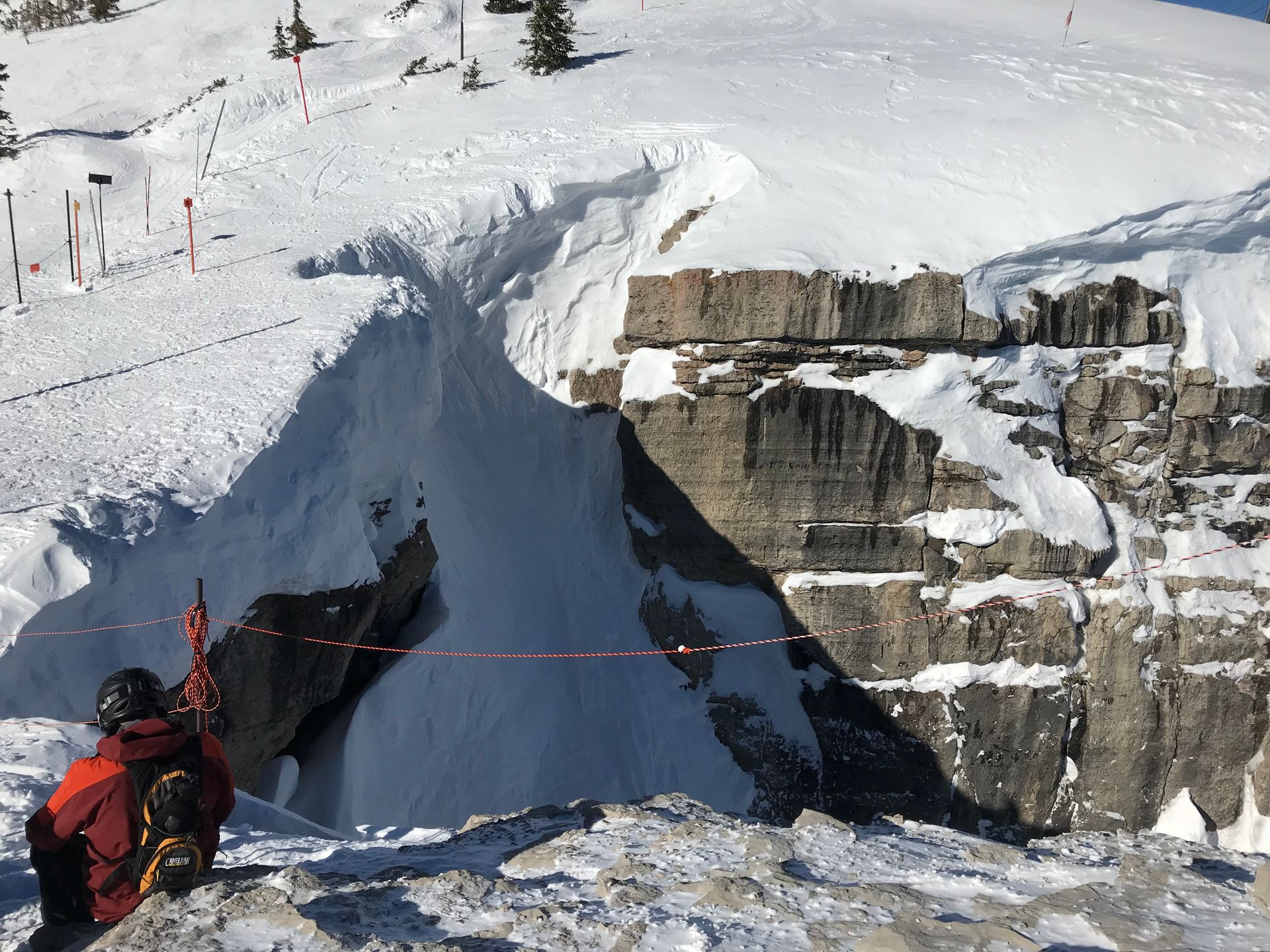
Then, my instructor took me to the top of the mountain to look at a run called Corbet's Couloir.
It’s a legendary run, and I was about to find out why. The entrance was roped off, but we could walk to the edge and see the drop. To get in, you have to literally jump from a cornice into a massively steep, narrow chute hemmed in by rock walls.
If you ski this, you land in a "no-fall" zone. You must make two critical turns to avoid the walls before accelerating into the chute below. If you stuff the landing, you’re gone. If you're too fast, you’re gone. If you catch an edge, you’re gone. You get the picture.
Gauging the entry sent a nauseating feeling through me. I felt unsteady on my feet and took a step back. I’ve skied some challenging things in my time, but this was different. The feeling was dark.
In that moment, I realised something critical. This wasn’t my run. This was no longer "pushing my comfort zone." This was just a massive, unacceptable risk.
From "Challenging" to "Dark" The Gut-Check We Must Trust
That feeling that shift from "this is exhilarating" to "this is foreboding" is the most important risk assessment tool you have. It’s your experienced, professional brain processing a thousand data points at once.
We have these same moments as educators:
With a Student: You might have a student who is "borderline" for an international trip. Does the challenge feel like it will push them to grow? Or does your gut check give you that "dark" feeling, an instinct that this student’s presence poses an unacceptable risk to themselves or the group?
With an Activity: You're on a hike, and the weather turns. Is this a "challenging" moment that will build resilience? Or has the combination of low visibility, group fatigue, and a tricky descent shifted the risk into that "unacceptable" category?
Your "gut feeling" is not magic. It is your experience and training culminating in a rapid, high-stakes assessment. The problem is, many are trained to ignore it in favour of "sticking to the plan."
Training Your Gut-Check
This is why generic risk management paperwork fails. A form can't tell the difference between a "good" challenge and a "bad" risk. Only a well-trained, competent leader on the ground can do that.
Good Training is what builds this instinct. It's the "professional development in risk management" we talk about. It moves you from "unconscious incompetence" (not knowing the risks) to "conscious competence," where you can articulate why your gut says no.
Good Systems (like Xcursion Planner) are what back up your gut check. That "dark" feeling is your brain saying, "The data doesn't add up." Your planning system is what provides that data weather forecasts, medical profiles, staff qualifications, emergency access times.
Understanding your limits, and the limits of your group, is vital. It's the skill that allows you to manage risk effectively. I was much happier to ski down another double-black run and live to ski another day.
Sometimes, the best risk management decision is the one that says, "No. Not this one. Not today.”