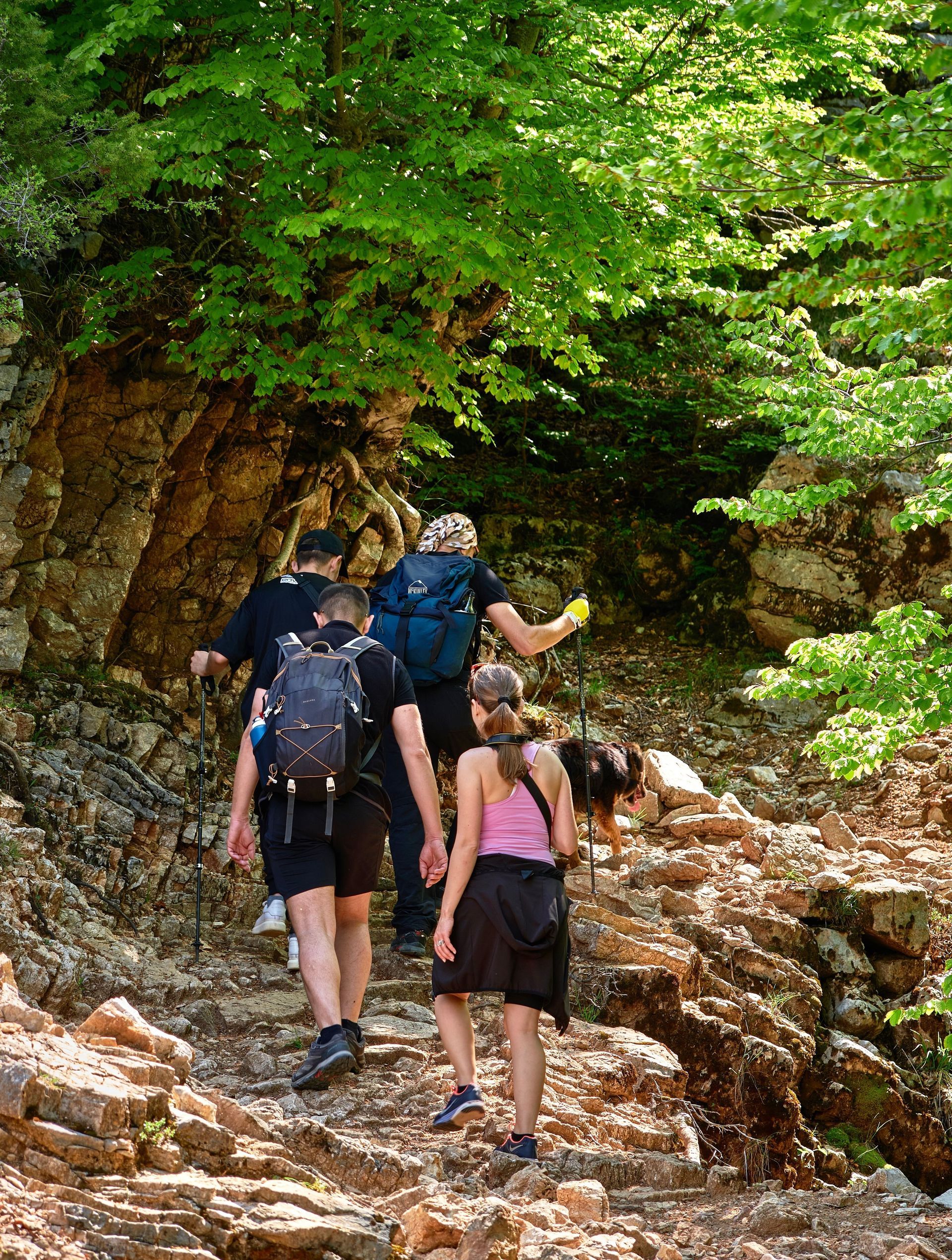
Risk management in schools is an interesting and concerning problem. There's nothing in teachers' training which helps them to understand the role and responsibilities of running activities outside the school grounds.
In years gone by, this wasn't too much of a worry as most teachers weren't involved with the sheer volume of additional programs, excursions, activities, and overseas trips which now form part of a normal year at school.
The Osmosis Myth
The only education that teachers seem to have in this is that at some point, they're involved in a trip somewhere doing something and rather than having any actual training to be able to manage and help run whatever it is in which they've now found themselves involved, they're entirely reliant on learning something about what they should be doing through osmosis.
The expectation that they absorb something at some point in time which then magically enables them to manage risk in a well-planned and professional way is ridiculous in the extreme, yet that's basically the industry standard.
Sadly, osmosis is a rather unreliable means through which people gain even a decent baseline level of any sort of skill, let alone risk management.
Would You Accept This in the Classroom?
It's like letting your English teachers learn about a text for the first time as they read it with (or slightly behind) the class, or your maths teacher teach themselves by reading a chapter ahead and asking the other teachers a few questions about 'this whole algebra thing.'
Parents would be horrified and continually write angry emails to the school if they knew their children were being taught by teachers who literally knew nothing about their subject areas.
Why is nobody upset when that same lack of skill and understanding is being applied to situations which place students at real risk of harm?
The Uncomfortable Questions
Why is risk management training such an afterthought? Why do schools rely on osmosis for one of the most critical things required to keep their students safe?
Is it because they don't care? Most likely not.
Is it because it's too expensive? Hardly. Most training days cost less than $500, while the cost to investigate even a minor incident runs into the thousands of dollars—and that's before any legal action.
Could it be something that they think they can contract out and not worry about because it's now someone else's problem? Perhaps they think they can do this, yet ultimately, they simply can't contract out excursion risk management and absolve themselves of responsibility. The duty of care remains with the school.
"I Didn't Know" Is Not a Defence
There is some level of naivety in all of this and what's commonly known as unconscious incompetence. You don't know what you don't know. So if you don't know it, then how can you be expected to do something about it?
Unfortunately, this is not considered a reasonable or acceptable defence when something goes wrong. It just makes you look more idiotic than before, and even a mediocre barrister will maul the hell out of a teacher who tries to use this.
The 'I didn't know' defence has sadly been used in coronial inquests, and no amount of ignorance has ever brought a deceased child back nor mended any shattered lives.
The "Just a Classroom Teacher" Fallacy
If training isn't too expensive and it's not too hard to do, why is it overlooked?
I've often had the reply from teachers: 'I'm just a classroom teacher, so I don't need to do anything like that.'
Yet these same classroom teachers are taking students downtown, interstate, and overseas on study tours, sports trips, and cultural immersion programs. Just because you're not white water canoeing in South America doesn't mean you, your students, and the school are not exposed to a huge range of potential risks from cultural misunderstandings to political and social risks and poor student behaviour, just to name a few.
Every time teachers leave the school gates with a group, they're responsible for the safety and wellbeing of that group.
Like the English teacher reading the text as they go, teachers regardless of subject expertise should not be out on a trip, anywhere, doing anything and making it up as they go.
The Reality Check
In my twenty-odd years in education (some more odd than others), the overwhelming trend has been to allow totally inexperienced and untrained teachers to take groups out and make stuff up as they go.
This is wrong, and at the end of the day, luck always runs out and situations like this will always end badly.
How Xcursion Planner Addresses the Training Gap
While no software can replace proper risk management training, Xcursion Planner helps bridge the knowledge gap for teachers who haven't received adequate preparation:
Structured Risk Assessment Templates
Rather than expecting teachers to know what risks to consider, the platform provides comprehensive checklists and frameworks specific to different excursion types. It prompts users to think through scenarios they might never have encountered.
Built-In Compliance Requirements
The system enforces minimum safety standards automatically. Permission notes must capture critical information. Risk assessments must be completed before departure. Medical information must be accessible. These aren't optional steps that inexperienced staff might skip they're mandatory gatekeepers.
Documentation and Review Systems
Create institutional memory around excursion risk management. When experienced staff document their decision-making process, newer staff can learn from real-world examples rather than starting from scratch or hoping osmosis kicks in.
Clear Supervision Ratios and Responsibilities
Automatically calculate required staff-to-student ratios based on activity risk levels and participant needs. This takes the guesswork out of one of the most critical safety factors.
Emergency Response Protocols
Provide inexperienced staff with step-by-step guidance during incidents. When something goes wrong, teachers shouldn't have to figure out who to call or what to document—the system walks them through it.
Incident Reporting and Learning
Capture near-misses and incidents in a way that builds organisational knowledge. This creates the foundation for genuine learning rather than hoping each teacher somehow absorbs best practices through exposure.
The Path Forward
Rather than rely on the magical fairy tale land of risk management through osmosis and making stuff up as you go, it's time to up the ante on teacher training and enable those keen and enthusiastic teachers who want to improve student learning through amazing real-world experiences to undertake some real risk management training.
This means:
Mandatory risk management training for all staff involved in excursions, regardless of subject area or destination
Ongoing professional development in excursion safety and duty of care obligations
Clear competency standards before staff can lead different types of excursions
Systematic planning tools that don't rely on individual expertise alone
Transparent incident reporting that builds institutional knowledge
Properly build their skillset around good risk management practices so that every trip on which they go is a memorable one for their students for all the right reasons.
Because when risk management fails, it's not the system that pays the price it's the student who doesn't come home, the family whose lives are shattered, and the teacher who lives with that burden forever.