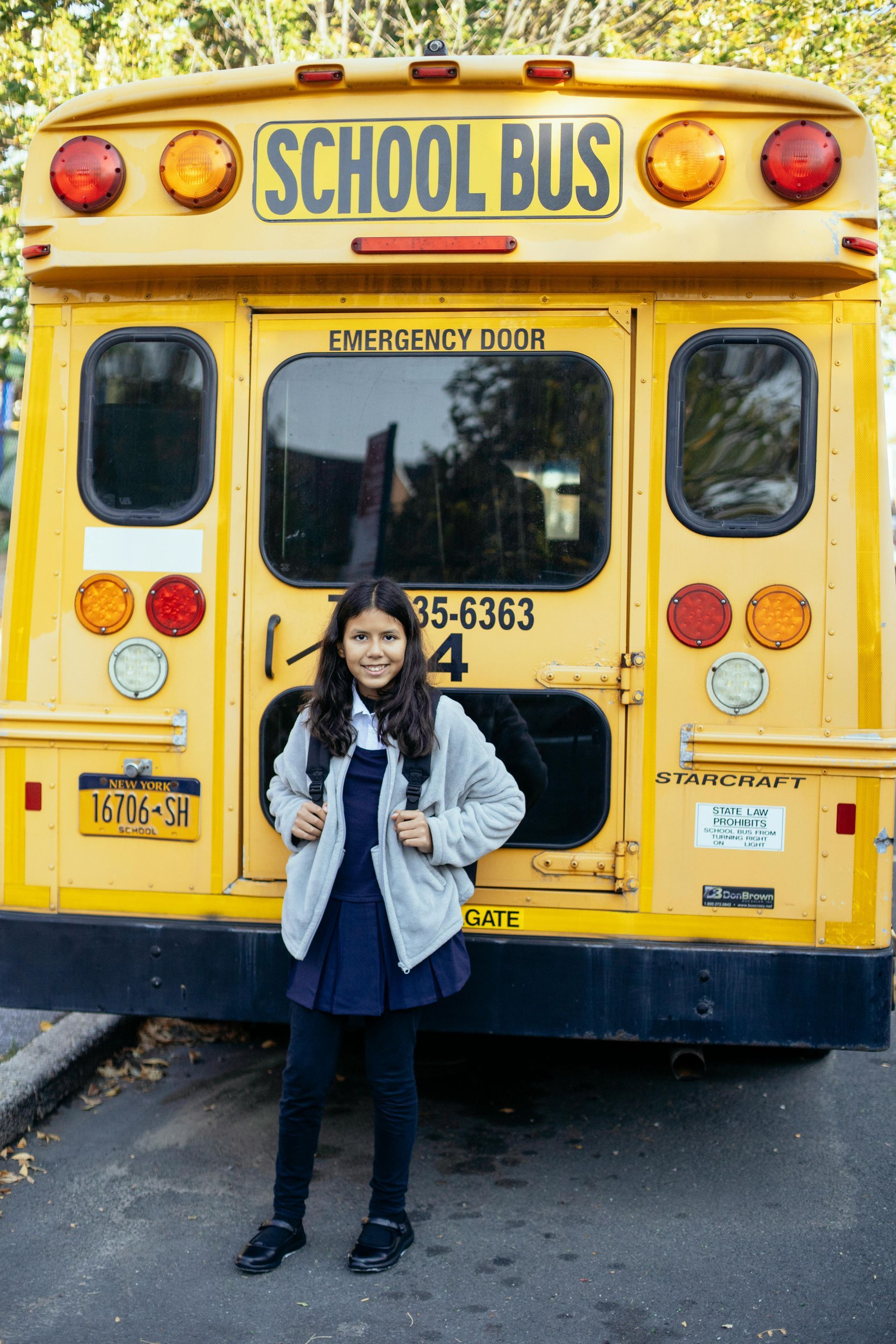
Long travel days expose a fundamental truth about school excursions: boredom creates risk. Restless students on buses aren't just uncomfortable, they become harder to supervise, more prone to poor decisions, and more likely to disengage from the entire experience before you've even arrived.
Most schools treat travel as dead time to be endured. Hours on coaches, trains, or planes are viewed as necessary evils separating students from the "real" educational experience. This is a missed opportunity and, frankly, a leadership failure.
The excursion begins the moment students board. How you structure those transit hours determines whether you arrive at your destination with engaged, energised learners or exhausted teenagers who've spent four hours staring at phones because nobody gave them anything better to do.
The Real Cost of Unstructured Travel Time
Poor travel planning creates cascading problems. Students become restless. Behaviour issues increase. Staff spend the journey managing disruptions rather than building anticipation for what's ahead. By the time you reach your destination — the museum, the camp, the sports venue — everyone's already tired and irritable.
This isn't abstract theory. On a recent interstate school sports trip, the coordinator shared their challenge: six hours on a coach with 40 Year 9 students. No structured activities. No planned stops beyond a single highway servo break. The supervising staff arrived frazzled. Two students had motion sickness from excessive screen time. Three behaviour incidents required documentation before they'd even checked into accommodation.
The assumption had been that students would "just manage" for six hours. They didn't. Because that's not how people — especially adolescents — work.
School risk assessments typically focus on destination hazards: water safety at the beach, activity risks at the adventure park, supervision ratios at the museum. Travel risk gets a cursory mention about seatbelts and emergency procedures. But the behavioural and engagement risks during extended travel rarely rate detailed planning.
That's backwards. The hours spent travelling often represent the longest continuous supervision period of any excursion. Getting it wrong affects everything that follows.
Building Structure Into Transit
Effective school excursion planning treats travel as its own program component, not empty space between events. This requires thinking beyond "what time do we leave" to "what experience do we create during those hours."
Start with rhythm. Long stretches of identical activity sitting, watching the landscape pass create mental fatigue. Break the journey into segments with different focal points. First hour: orientation and anticipation-building. Second segment: light challenge or game. Next block: individual reflection time. Then a physical break at a planned stop.
Physical stops matter enormously but need purpose beyond bathroom access. A 15-minute pause at a scenic lookout or historical marker transforms a necessary break into a mini-learning moment. Students stretch their legs, reset their attention, and return to the coach with renewed tolerance for sitting.
One primary school principal shared their approach to a three-hour journey to outdoor education camp: they planned stops at a local botanical garden and a heritage railway museum both 30 minutes off-route but perfectly timed to break the monotony. The detours added minimal travel time but completely changed the energy. Students arrived at camp having already learned something, rather than having merely survived transit.
Digital tools enable smarter coordination. When you map your route and timing in advance, you can identify rest stops that add value, schedule them at optimal intervals, and communicate the plan to all supervising staff. Everyone knows when breaks occur, what happens at each stop, and how long remains until the next segment.
Engagement Strategies That Actually Work
Activities during travel need to match the constraints of the environment. Complex tasks requiring materials don't work on moving vehicles. Screen-heavy activities trigger motion sickness in susceptible students. The sweet spot is low-equipment engagement that works with the journey itself.
Photo challenges turn passive observation into active participation. "Find and photograph three examples of rural industry." "Capture the most interesting vehicle we pass." Students compete in small teams, scoring points that create friendly rivalry without requiring staff to adjudicate constantly.
Quiz games tied to the destination create anticipation. Heading to a history museum? Questions about the period you'll be studying. Travelling to a sports competition? Trivia about the venue, the opposing teams, the sport's evolution. The content preview primes students for deeper engagement when they arrive.
Prediction activities leverage the unknown ahead. "How many towns will we pass through?" "What time will we spot the first mountain?" "Guess the temperature when we arrive." Students log their predictions, creating investment in tracking progress throughout the journey.
School camps and activities that integrate these approaches report notably different travel experiences. Students who participate in structured engagement during transit arrive more positive, more cohesive as groups, and more ready to engage with the primary program.
The key is preparation. Improvising activities while managing a moving vehicle full of students doesn't work. Pre-planning the entire travel experience including activities, timing, stops, and transitions allows staff to facilitate rather than scramble.
Safety Takeaway: Engagement Is Risk Management
The connection between student engagement and safety during travel isn't obvious until you've experienced both extremes. Bored students create supervision challenges. They move around more, demand more attention, test boundaries, and require constant behavioural management. Engaged students self-regulate better, respond more positively to instructions, and maintain better situational awareness.
This matters particularly during stops. Students who've been passively enduring hours of travel rush out at rest breaks with pent-up energy and poor focus. Students who've been actively engaged transition more calmly and listen better to safety instructions about staying with the group, respecting the space, and timing for departure.
Your travel planning reveals your leadership philosophy. If you view the journey as time to be endured, you're telling students and staff that you haven't thought carefully about their experience. If you structure travel as part of the learning program, you demonstrate that every element has been considered and purposefully designed.
The excursion doesn't begin when you
arrive. It begins when you
depart. Plan accordingly.